Congressional hawks lobby for more military spending after a debt deal does little to reduce it; Saudis slash output to offset Russian bootlegging
(Originally published June 5 in “What in the World“) Saudi Arabia said that in July it would slash production of crude oil by roughly 10% as part of an effort by OPEC+ to prop up falling prices.
Oil prices climbed a year ago to almost $119 a barrel, their highest in a decade, but have since sunk by almost 35% to roughly $77 a barrel. Hastening that decline are concerns about global economic growth, not to mention increased production by Russia, which has kept selling its cheaper crude to China and India below a $60 cap sought by the U.S. and its allies as part of sanctions for invading Ukraine. Some OPEC members accuse Russia of violating its February promise to cut production by about 5%. Data from the International Energy Agency puts Russian oil production at a post-invasion high of 8.3 million barrels a day.
OPEC+ includes the 13 members of the Organization of the Petroleum Exporting Countries, as well as Russia and 10 other oil exporters, including Kazakhstan and Mexico. Combined, its members account for 40% of the world’s crude oil production.
While Saudi Arabia said its cuts are only for one month, it said they could be extended. Falling energy prices have been a rare bit of relief from the inflationary pressures facing consumers and that have prompted the Federal Reserve to raise its key interest rate 10 times since March 2022, to 5.25% from 0.25%. While the Fed continues to tackle broader inflation, gasoline prices for U.S. drivers have fallen in the past year by more than 20%, to roughly $3.55 a gallon.
U.S. President Joe Biden’s signature isn’t even dry yet on the new law capping some government spending in return for raising the U.S. Government’s debt ceiling and avoiding default. But defense hawks are already demanding an emergency bill to increase funding to the Pentagon.
Six Republican Senators last week demanded an emergency spending bill that would increase defense outlays beyond President Joe Biden’s proposed $886 billion budget for fiscal 2024. The debt-ceiling bill locks Biden’s defense spending in place, allowing for only a 1% increase in fiscal 2025, to $895 billion.
Defense hawks on both sides of the aisle say that isn’t enough, noting that the 3.3% increase in Biden’s 2024 defense budget—up from a record $858 billion defense budget the year before—doesn’t keep up with inflation. Democrats have adding extra funding for the Pentagon into the next supplemental spending bill for Ukraine, which Biden will propose to Congress in the next few months as current funding runs out.
Even without such efforts to create exceptions to the debt ceiling, the new law will reportedly do little if anything to reduce the U.S. Government’s debt.
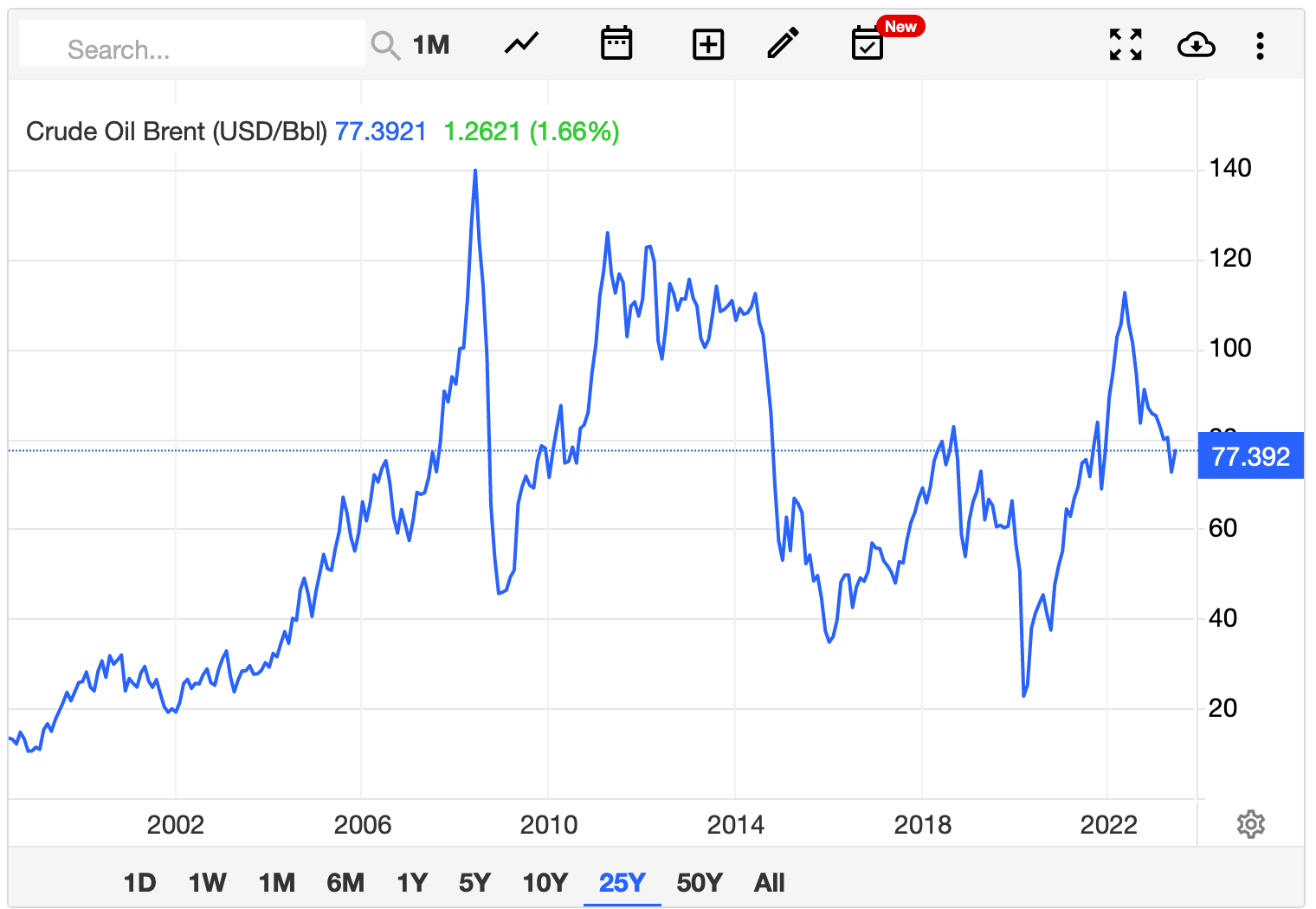
Source: Trading Economics