Trump needs somebody… not just anybody… to help him restart Gulf oil flows
(Originally published March 16 in “What in the World“) Trump is calling on allies and rivals alike to help him un-block Iran’s blockade of the Strait of Hormuz.
Trump on Saturday called on China, France, Japan, South Korea, and the United Kingdom to join efforts to guard the strait, through which a fifth of the world’s oil passed until he decided to join Israel in attacking Iran. Iran responded predictably by attacking vessels trying to traverse the narrows, prompting most shippers to simply stop using it and thus creating the biggest disruption of oil shipments ever. Iran then also used its fleet of fast boats to mine the Strait.
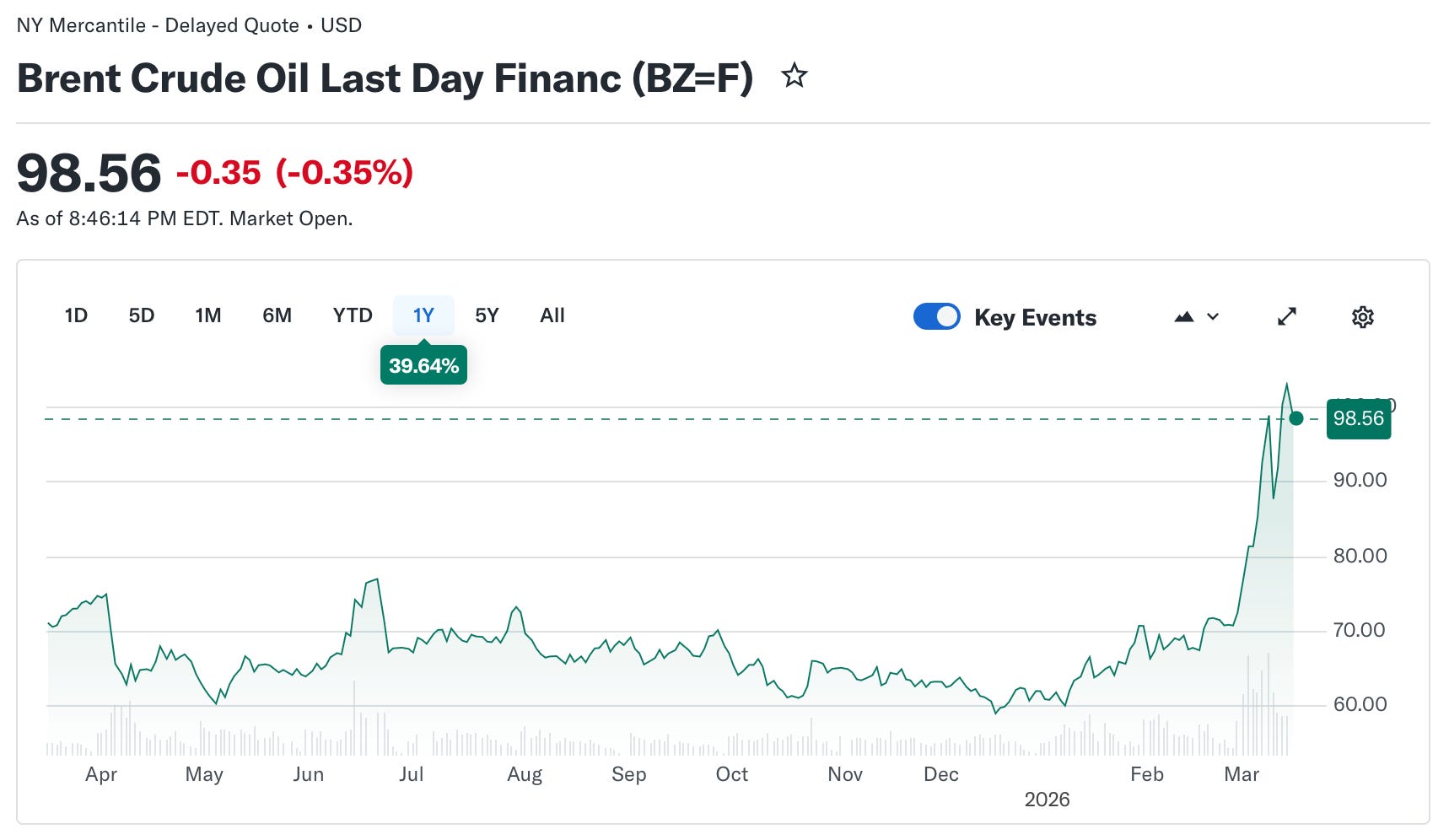
Oil prices have soared by roughly 40% to more than $100/barrel, sending U.S. gasoline prices up by as much a 30% just as much of the Midwest is hit by a massive snowstorm. The surge has prompted a record $115 million of inflows over the past week from individual investors into the United States Oil Fund exchange traded fund.
As Israel on Sunday launched a new wave of airstrikes on Iran and Lebanon, Trump warned fellow members of the North Atlantic Treaty Organization that they faced a “very bad” future if they didn’t come to his assistance in the Strait of Hormuz. “It’s only appropriate that people who are the beneficiaries of the Strait will help to make sure that nothing bad happens there,” Trump told the Financial Times. “If there’s no response or if it’s a negative response I think it will be very bad for the future of NATO.”
Some NATO members have already realized that Trump’s war will inevitably suck them in. France, for example, already dispatched naval vessels to the region to protect vital shipping. While Trump plans to announce some kind of coalition of the willing, and the European Union is discussing extending the reach of the two-ship task force it set up in 2024 to protect ships in the Red Sea from Houthi attacks, both France and Italy have reportedly been negotiating directly with Tehran seeking safe passage for their own ships.
Trump seems determined to make matters worse. While Iran has effectively blocked its Gulf rivals from shipping oil and gas through the Strait of Hormuz, Trump on Saturday ordered an airstrike on Iran’s Kharg Island, a major oil processing hub in the upper Gulf. While the strikes targeted military installations and not the oil processing facilities, Trump threatened to expand the attacks. “We may hit it a few more times just for fun,” Trump told NBC. Some are speculating that the 2,500 Marines Trump is moving from Okinawa to the Gulf are heading to seize Kharg.
But knocking out Iranian oil production would further curtail global oil supplies, forcing prices even higher, and eliminate what little remaining motivation Iran has for re-opening Hormuz. Worse, the blockade may force Gulf oil producers—which Iran is still attacking with missiles and drones—to shut down oil fields, which can then take weeks to restart if and when shipments through Hormuz finally resume. That could push oil prices higher for longer, oil company executives warned the White House in meetings last week. Wall Street analysts were singing the same chorus by Friday. And even U.S. Energy Secretary Chris Wright seemed to embrace the fact that Trump has triggered an energy crisis in a television interview Sunday.
The blockade is also shutting exports of natural gas, which beyond its use as a fuel is also an important ingredient for the manufacture of fertilizer, prices for which are also spiking. Shipments of naphtha, a raw material for making plastics are also in short supply.