With tariff-induced price increases looming, US consumers show signs of fatigue
(Originally published May 16 in “What in the World“) U.S. consumers, already facing higher prices thanks to Trump’s tariffs, may have finally shopped to the point of dropping.
Delinquencies rose 3.6% in the first quarter of the year compared to the last three months of 2024, to 4.3% of outstanding household debt—which also climbed 10% to $18.2 trillion, according to the Federal Reserve Bank of New York.
The problem is that Americans have continued to increase spending even though wage growth has slowed after a post-pandemic surge. This obviously increases the odds of household insolvency, as people run down savings to pay their rising credit card bills and make mortgage payments, thereby raising risks to the housing market and the economy overall. It was this surge in spending, economists say, that helped keep the economy from sliding into the recession many thought would hit by the end of 2024. But if incomes don’t resume rising fast enough for consumers to catch up on their debts, spending will inevitably fall. Economists warn that could be the straw that breaks the economy’s back.
For the moment, however, consumer spending still appears to be holding up. After climbing 4.6% in the first quarter compared to the same three months of 2024, early estimates by the U.S. Census Bureau show consumer spending in April grew 5.2% year-on-year. Even adjusting for inflation, consumer spending grew by more than 2% in the first quarter, and by almost 3% in April. But as we know, many consumers have been stocking up on goods likely to be hit by Trump’s tariffs, if and when they finally kick in. And economists are pointing to a drop in retail sales in April from March as a worrying sign.
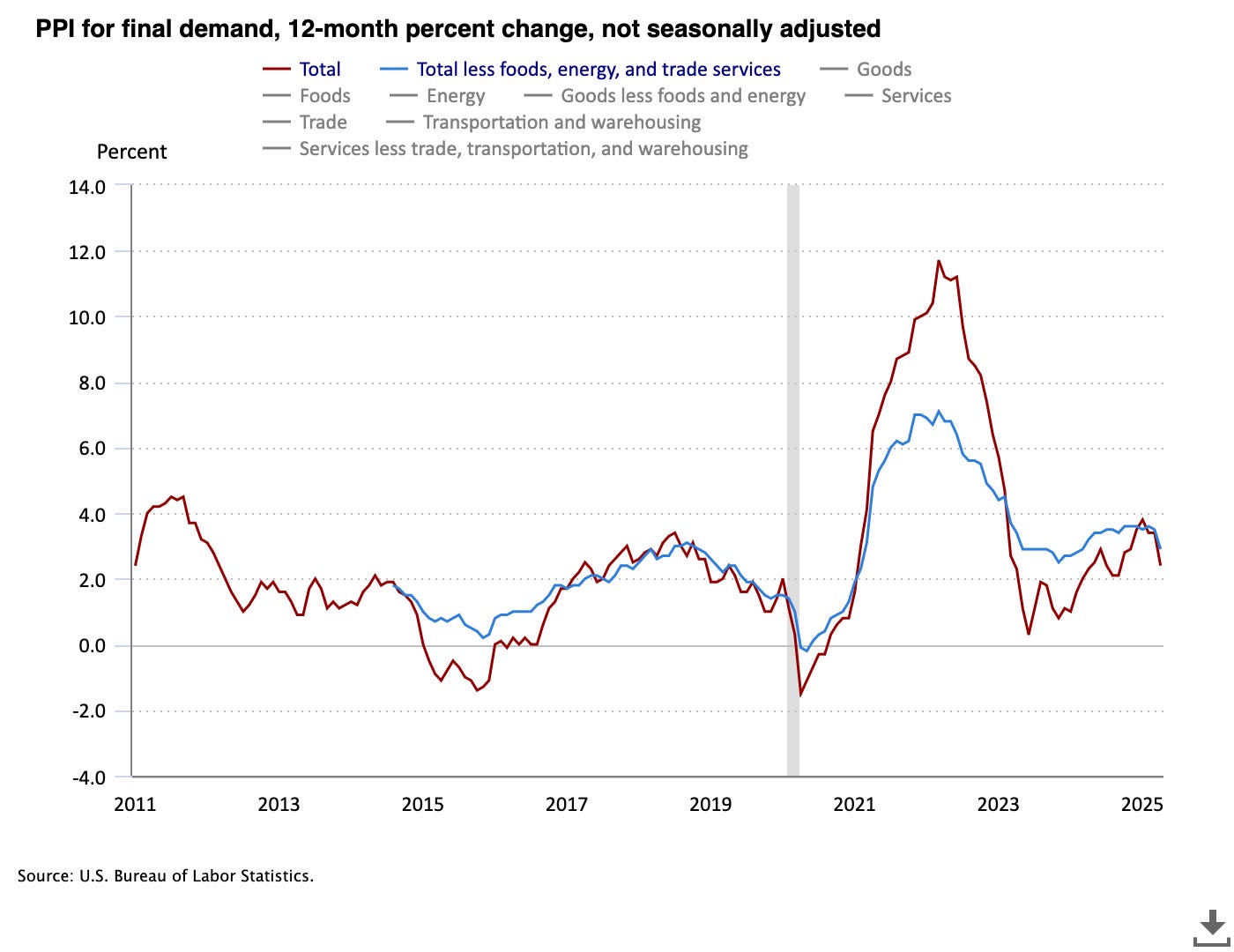
More telling is a drop in manufacturing output: the Federal Reserve’s index of manufacturing fell 0.4% in April from March after increasing by a corresponding amount in March. Producer prices—the supply-side equivalent of consumer price inflation—are also falling: the Bureau of Labor Statistics said its producer price index fell 0.5% month-on-month in April, with growth in year-on-year prices slowing sharply to 2.4%, from 3.4% in March.
Another potentially leading indicator? Business travel to the U.S., which fell 9% in April year-on-year, according to preliminary data from the U.S. National Travel and Tourism Office.
Nobel prize-winning economist Michael Spence has meanwhile added his voice to the chorus warning that Trump’s policies are doing permanent damage to the U.S. economy, writing that:
The long-term stability of the U.S. economy and financial system are also at risk, as the Trump administration weakens their institutional underpinnings. These include a commitment to capital-account openness and to price and fiscal stability; a U.S. Federal Reserve that is not subject to short-term political pressures; and a legal and regulatory system that applies rules and adjudicates disputes fairly for foreign and domestic actors alike. If this trend continues, foreign investment flows may be diverted away from the U.S.—precisely the opposite of Trump’s stated goal.